
Windows 10’s Grave is Zorin’s Gold Mine: 780,000 Users Jump Ship
Microsoft officially pulled the plug on Windows 10 support last October, and the fallout is already appearing in the server logs of the Linux world. Zorin OS 18, the latest version of the Irish-made distribution, hit one million downloads just five weeks after its release. The most telling figure isn't the total volume, but the origin: telemetry data shows that 780,000 of those downloads—a staggering 78%—came directly from Windows machines.
This isn't just a win for open-source enthusiasts; it’s a mass migration. As the "death clock" for Windows 10 expired, millions of users found themselves staring at a hardware ultimatum. Rather than binning perfectly functional PCs that fail Microsoft’s arbitrary Windows 11 hardware checks, a massive segment of the market is looking for a way to stay online without buying a new laptop.
The 780,000-User Surge: Migration or Curiosity?
While the Zorin team is celebrating the record-breaking influx, a healthy dose of skepticism is required. A download is not a permanent installation. In the tech world, an ISO download often represents a "look under the hood"—a user booting from a USB stick to see if their Wi-Fi card actually works before committing to a full wipe.
However, even if only half of those 780,000 Windows refugees stick around, it represents a massive demographic shift. Reports from XDA Developers and Zorin’s internal tracking suggest this isn't the usual hobbyist crowd. These are everyday users who feel backed into a corner by mandatory upgrades. For them, Zorin OS 18 has become a viable escape hatch from a Microsoft ecosystem that feels increasingly intrusive and hardware-hungry.
Microsoft’s Hardware Ultimatum is Zorin’s Gain
The timing of this surge is tied directly to the e-waste crisis triggered by Windows 11. By requiring TPM 2.0 and newer CPUs, Microsoft effectively orphaned millions of capable machines. We are talking about high-performance hardware—like PCs running Intel 7th Gen or first-generation AMD Ryzen chips—that have been relegated to "obsolete" status despite having years of life left.
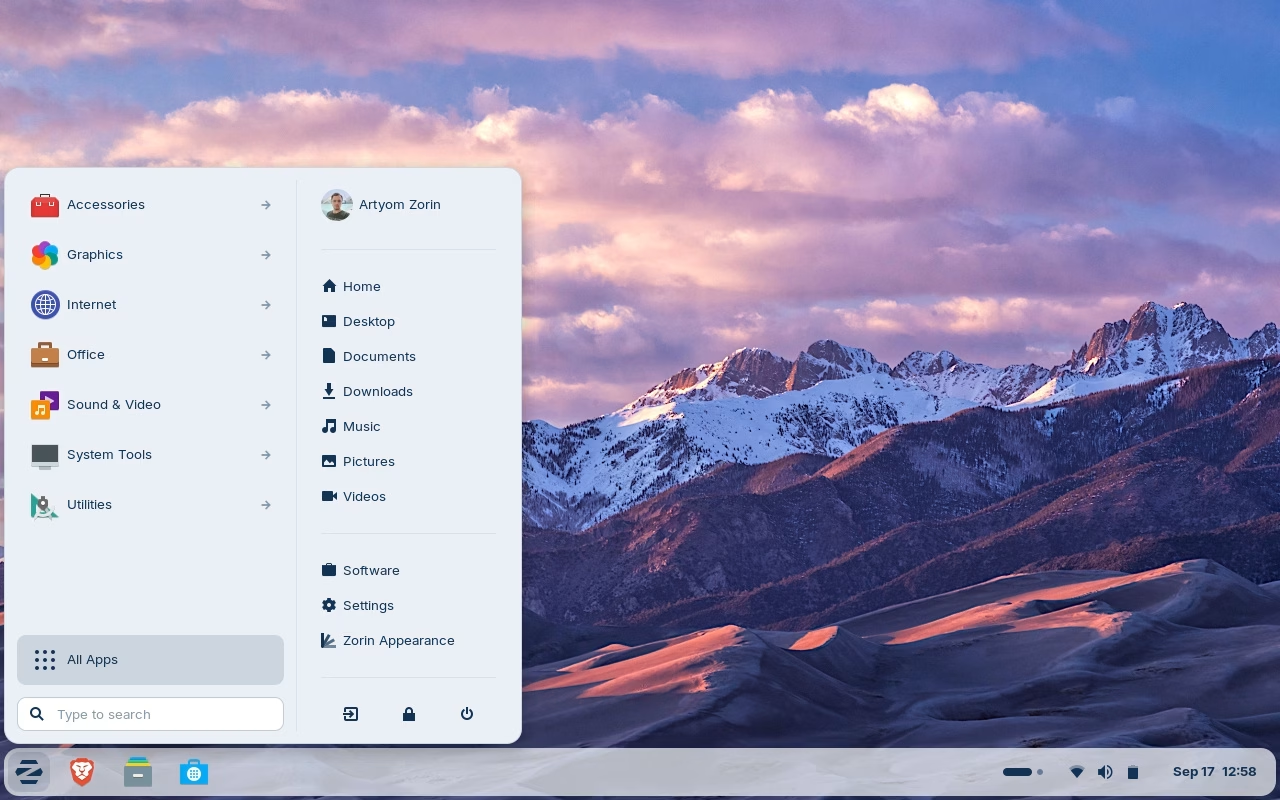
Industry analysts previously warned that Windows 10’s end-of-life could send up to 240 million PCs to the landfill. Zorin OS 18 is positioning itself as the primary antidote to this forced obsolescence. By focusing on "Design as a Feature," the OS is engineered to mimic the Windows interface so closely that the learning curve is almost non-existent.
The "Great Desktop Migration" is being fueled by more than just software updates. Users are jumping ship to reclaim their privacy and extend the life of their gear. Unlike Windows 11, Zorin runs efficiently on the very machines Microsoft just abandoned, turning potential e-waste back into productive tools. This transition has been smoothed over by the recent explosion in Linux gaming compatibility; thanks to the groundwork laid by the Steam Deck and SteamOS, the old excuse that "Linux can’t play games" has finally lost its teeth. Even the installation process has been refined to the point of being more streamlined than a fresh Windows setup.
The Friction of the Switch
Despite the momentum, moving to Zorin isn't a friction-less utopia. No matter how much a Linux distribution looks like Windows, it still requires users to find alternatives for proprietary software like the Adobe Creative Cloud or specialized enterprise tools. The "drop in the bucket" argument still holds weight—780,000 users is a rounding error compared to the billions still tied to Microsoft.
But for the first time since the mid-90s, the barrier to entry for the average consumer has collapsed. The migration to Zorin OS 18 proves that when pushed, users will prioritize a working computer over brand loyalty. The real test will be how many of these 780,000 "refugees" are still using the OS six months from now, or if the friction of leaving a familiar—if frustrating—ecosystem eventually drives them back to the store to buy a new Windows 11 PC. For now, however, the message to Redmond is clear: users are tired of being told their hardware has an expiration date.