
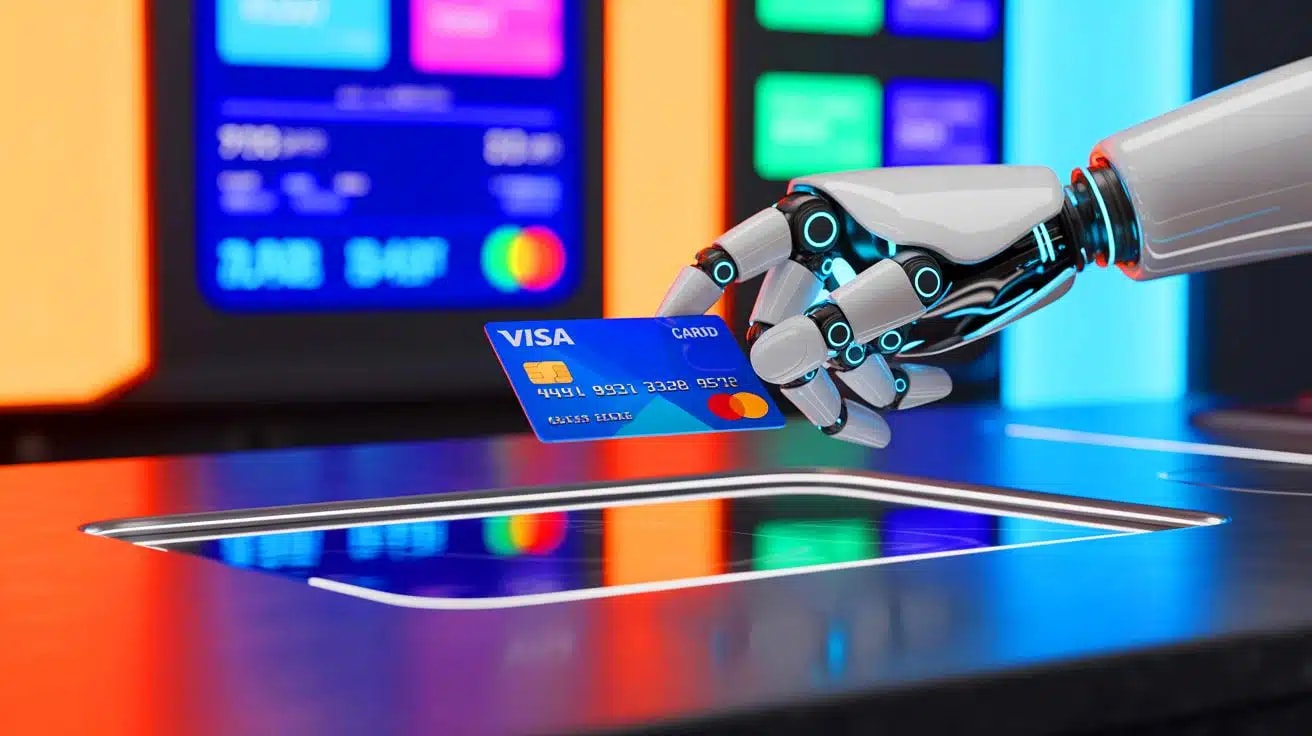
Visa’s $35 Billion Bet: Can "AI Pay" Actually End the Fraud Arms Race?
The numbers are aggressive. Internal pilot data claims the system predicts and blocks fraud with 98% accuracy. To put that in perspective, the previous industry gold standard hovered around 92% to 94%. That 4% gap represents billions of dollars in recovered revenue. To hit these targets, Visa poured $500 million into AI R&D this year alone, a massive 66% increase over their 2024 spend.
Moving Faster Than the Thief
Security is a game of milliseconds. Traditional fraud detection is reactive, looking at what a thief did five minutes ago. Visa’s new infrastructure, built in tandem with Google Cloud, shifts the focus to predictive modeling. The system now scrutinizes anomalies in under 50 milliseconds—literally faster than the blink of an eye.
The real victory for the average consumer isn't just stopping the bad guys; it’s stopping the "false alarm." We’ve all had a card declined while traveling because the bank got nervous. Early beta tests from November show a 25% drop in these false positives. For a merchant, that is the difference between a completed sale and a frustrated customer walking away.
Peek Inside the "Black Box"
The most significant shift for business owners is the move toward "Explainable AI" (XAI). For years, AI-driven declines were a mystery. A transaction would fail, and the merchant was left with a generic "Error 05."
The new XAI dashboard changes that. Instead of a "yes/no" binary, merchants see the specific risk logic. For example, the system might flag a $2,000 purchase because the latency between the buyer's IP address and the card's registered home zip code is physically impossible for a human to travel. It provides a "Risk Score" based on a cocktail of variables—device fingerprints, velocity of transactions, and even the "rhythm" of the user's typing or swiping. This transparency allows merchants to override certain flags if they have additional offline verification, something that was nearly impossible under the old "black box" algorithms.
The Human Cost of Automation
Despite the technical polish, the rollout faces stiff skepticism from privacy advocates. "Efficiency is the enemy of anonymity," says Marcus Thorne, a senior researcher at the Financial Privacy Initiative. "When you analyze transactions in this much detail, you aren't just looking for fraud; you're building a psychological profile of the spender."
A Global Power Play
The rollout isn't a slow burn; it’s a global sprint.
-
In North America, the focus is on heavy hitters like Chase and Bank of America to shore up e-commerce vulnerabilities.
-
Europe is seeing a more surgical approach, where the AI is tuned specifically for GDPR compliance and cross-border monitoring in the UK and Germany.
-
The Asia-Pacific strategy targets the QR code explosion. With regional fraud rates in places like Southeast Asia sitting 20% higher than the global average, Visa is prepping a Singapore-specific launch for January 2026.
-
In Brazil, the tech is being repurposed for social good, using alternative credit scoring to help unbanked citizens prove their creditworthiness through payment history rather than traditional debt.
Visa expects this platform to handle half of its total transaction volume—over 100 billion transactions—by this time next year. If it works, it’s a trillion-dollar shield. If it glitches, it’s a bottleneck for the global economy.