

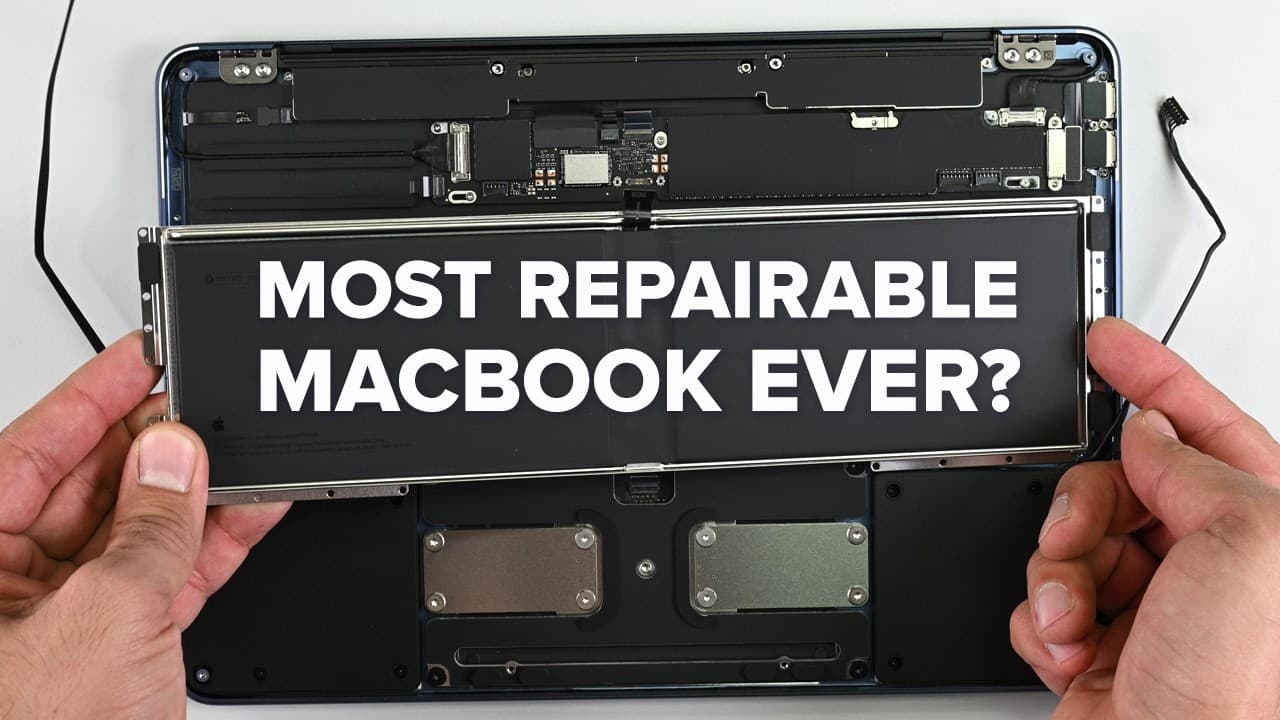
Apple’s new $599 MacBook Neo is officially the company's cheapest laptop, but the real shocker is hiding inside the chassis. According to a fresh teardown from repair advocates iFixit, the Neo is the most repairable MacBook we've seen in roughly 14 years.
The entry-level machine earned a solid 6 out of 10 for repairability. That might sound modest, but for a modern Apple laptop, it's virtually a miracle. Apple is finally ditching its notoriously anti-repair habits, swapping out user-hostile roadblocks for accessible components and straightforward disassembly.
The End of Glued-In Batteries
The biggest engineering win here is the battery assembly. Apple has spent years drowning its laptop batteries in industrial adhesive, turning a simple replacement into a frustrating, chemical-soaked nightmare.
The MacBook Neo completely scraps the glue. Apple now houses the power cell in a dedicated tray locked down by 18 individual screws. While twisting that many fasteners takes a little elbow grease, the teardown team absolutely celebrated the change.
As iFixit bluntly put it, "screws still beat adhesive every time." The site noted that this highly accessible setup actually sent cheers across their office, since it radically lowers the barrier for standard battery swaps.
Modular Components and Software Compliance
The good news doesn't stop at the power source. The MacBook Neo features a flat disassembly tree, meaning technicians no longer have to rip out unrelated components just to fix a specific part. Display and keyboard assemblies are vastly easier to swap out compared to previous hardware generations.
Apple actually updated its internal software to play nice with these hardware changes, too. iFixit found that the built-in Repair Assistant software now accepts replacement parts without throwing a digital temper tantrum.
The Limiting Factors: Soldered Memory and Storage
Of course, the laptop still falls short of a perfect repairability score. The primary culprits dragging down the grade are exactly what you'd expect: soldered RAM and storage modules.
That 6 out of 10 score ultimately reflects this compromise. The standard wear-and-tear components are a breeze to replace, but the core silicon remains stubbornly fused to the logic board.