
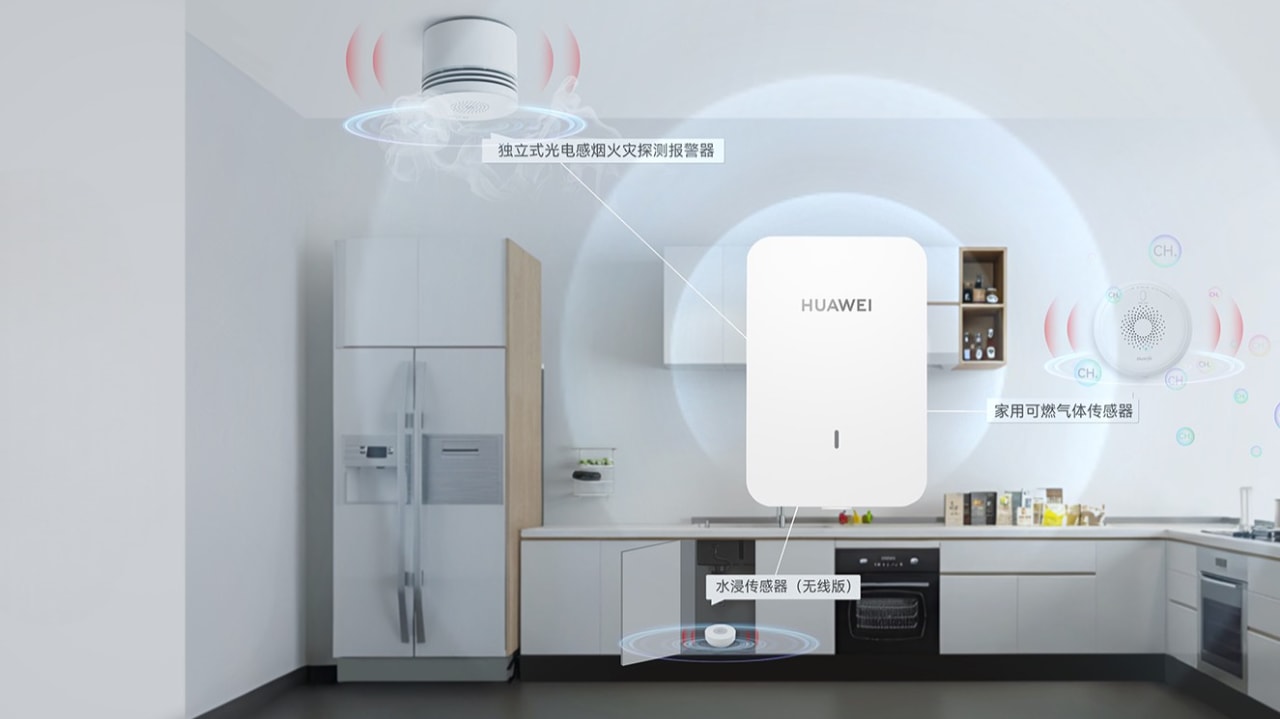
Huawei’s HSG-100 Gateway: A Strategic Play to Fix the IoT Handshake
Huawei kicked off 2026 yesterday with the launch of the HarmonyOS Smart Hub Gateway (HSG-100 series), a device designed less as a "hub" and more as a solution to the persistent "handshake" issues between legacy IoT hardware and the newer HarmonyOS NEXT ecosystem. Unveiled during a New Year's Day livestream in Shenzhen, the hardware is Huawei’s latest attempt to bridge the gap for users tired of the lag and fragmentation that usually comes with mixing old and new smart home tech.
The company is using this launch to propel its ambitious goal of hitting 1 billion HarmonyOS devices by the end of 2026—a steep climb from the 800 million reported just a few months ago. However, industry observers remain skeptical. With Huawei still effectively locked out of the North American market, reaching that billion-unit milestone places an immense burden on domestic Chinese loyalty and rapid adoption across Europe and Southeast Asia. At ¥499 (approximately $70 USD), the HSG-100 is priced to compete directly with mid-to-high-tier hubs from Xiaomi and Aqara, signaling that Huawei is no longer content with just the premium niche; they want the mass-market living room.
The Real Winner: Bluetooth Mesh Over Traditional Wi-Fi
While the HSG-100 boasts dual-band Wi-Fi (2.4GHz and 5GHz) with 1.2 Gbps speeds, the real winner here isn't the Wi-Fi; it’s the Bluetooth mesh implementation. For a user living in a three-story house or an apartment with thick concrete walls, traditional Wi-Fi hubs often create "dead zones" where smart locks fail or lights become unresponsive. This mesh system effectively turns every connected device into a signal repeater, covering up to 300 square meters and supporting 200 devices.
By keeping latency under 50ms, Huawei is addressing the "human" side of automation: the frustration of standing at a door for three seconds waiting for a "smart" lock to recognize a command. This hardware profile is a direct response to the inconsistent performance of the 2024 models, shifting the focus from theoretical speed to practical reliability.
Beyond the Spec Sheet: Efficiency and Security
Huawei has also moved away from the cumbersome manual pairing of previous generations. A new QR-based onboarding system cuts setup time in half, but the real value lies in the background operations. A 5W standby power draw might seem like a minor technical detail, but across a 200-device ecosystem, it is the difference between an energy-efficient home and a "vampire" setup that constantly bleeds power. This efficiency is paired with an AI-driven anomaly detection system. Instead of just encrypting data, the hub actively monitors for "weird" device behavior—like a smart bulb suddenly trying to access the network's external gateway—mitigating the vulnerabilities that have historically plagued cheap IoT sensors.
Strategic Crossroads for HarmonyOS NEXT
This isn't just a hardware refresh; it is a defensive wall around the HarmonyOS NEXT ecosystem. Richard Yu, CEO of Huawei's Consumer Business Group, highlighted that the gateway now supports over 1,000 third-party brands. By integrating Matter protocol standards and Zigbee Alliance support, Huawei is attempting to play nice with global standards while keeping the "brains" of the operation firmly within its proprietary OS.
Market analysts at IDC suggest this gateway could account for up to 15% of Huawei's IoT revenue this year. The inclusion of a localized AI voice assistant means the hub processes natural language commands on the device itself rather than sending every "turn off the lights" request to a distant server, a move that enhances both speed and privacy.
Navigating a Fragmented Global Market
The HSG-100’s rollout highlights the split reality of modern tech. In China, the device is already hitting shelves (scheduled for January 5) with full compliance for 2026 data residency laws. To grease the wheels of adoption, Huawei is bundling the hub with free hardware on Tmall and JD.com.
The international path is more complex. A European launch is slated for February, provided the device clears the latest GDPR compliance hurdles. In Southeast Asia, Huawei is tailoring hardware to the environment—integrating humidity sensors into the gateway specifically for tropical climates. While the US market remains a "no-go" zone due to ongoing trade restrictions, Huawei is pivoting to Indonesia and neighboring markets with aggressive localized pricing, often targeting a sub-$60 USD price point to undercut Western competitors.