
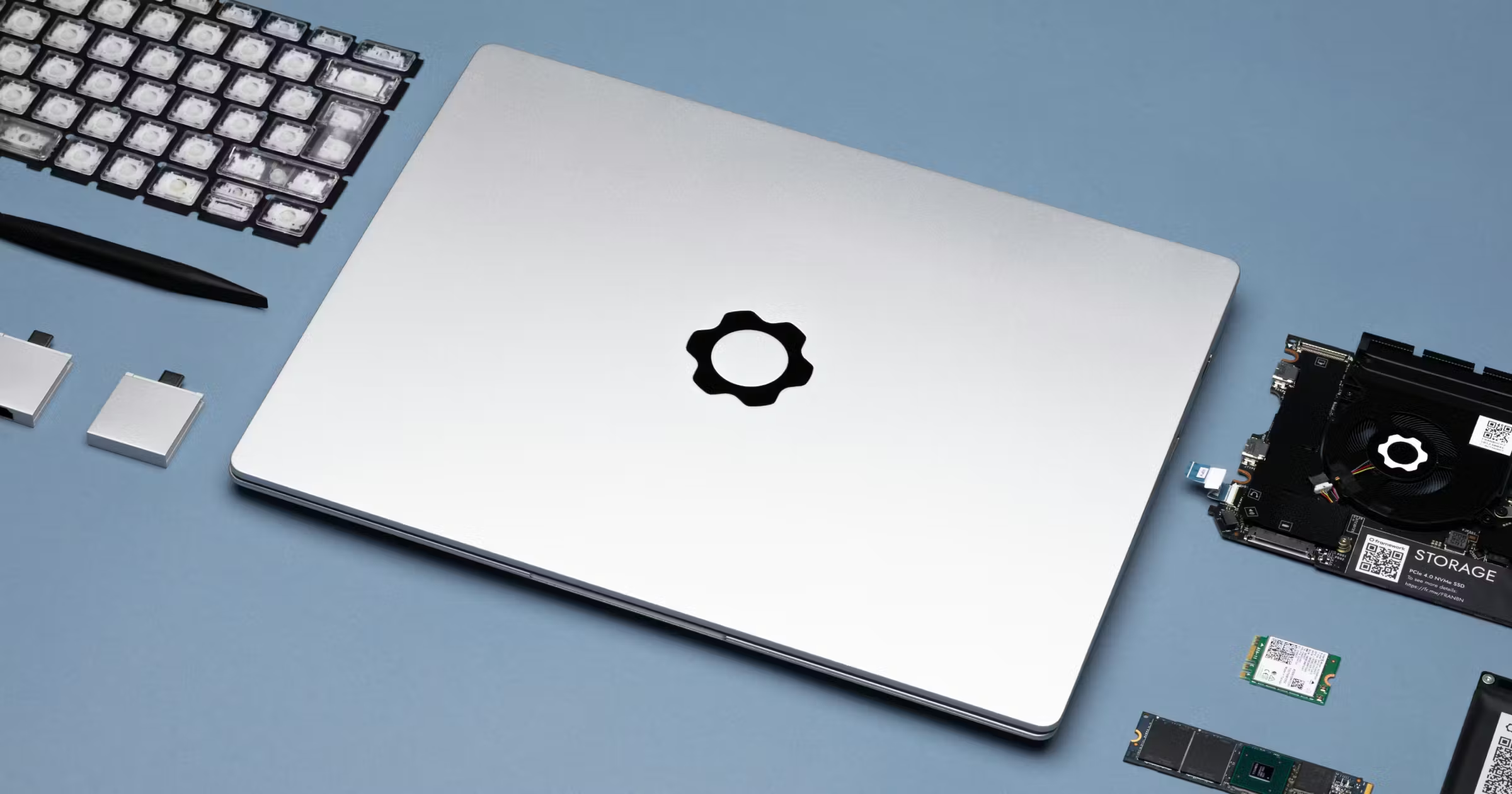
Framework to Customers: Stop Buying Our RAM
Framework Laptop just confirmed its second DDR5 price hike of December 2025, and the outlook for early 2026 is even grimmer. In a blunt admission of supply chain fragility, the modular laptop maker is now actively encouraging customers to source their memory from third-party retailers to avoid the company’s own rising markups.
The Cost of Transparency: Two Hikes in 20 Days
Framework isn't sugarcoating the pill. Effective December 25, the price of its branded DDR5-5600 modules spiked by up to 18%. A 16GB stick that cost $59 at the start of the month now sits at $69, while 32GB modules jumped from $109 to $129. This follows an earlier 10–15% increase on December 10, meaning the "Framework tax" on a DIY build has ballooned significantly in less than three weeks.
While industry giants like Dell and Apple mask component volatility behind static, high-margin MSRPs, Framework’s business model forces these fluctuations into the light. The company warned that a third hike—estimated at another 15–20%—is already locked in for late January 2026. This isn't corporate greed; it’s a direct pass-through of costs from suppliers like Micron and Samsung, who have pivoted their production lines to chase high-margin AI and data center contracts, leaving consumer-grade silicon in short supply.
The Logistics White Flag
In a move rarely seen in consumer electronics, Framework CEO Nirav Patel issued a statement advising buyers to look elsewhere. "We’re seeing continued upward pressure on memory costs from our suppliers," Patel admitted. He explicitly pointed customers toward PCPartPicker to find better deals, essentially conceding that Framework's internal logistics cannot compete with the sheer scale of retail giants like Amazon or Newegg.
There is a biting irony here. Framework’s greatest strength—its modularity—is currently being used as a release valve for its supply chain failures. If you buy a MacBook Air or a Dell XPS 13, you are trapped in a "soldered-RAM tax" where 16GB of extra memory can cost an arbitrary $200 markup. Framework allows you to escape that trap, but by telling users to "Bring Your Own Memory" (BYOM), the company is admitting it can no longer offer a competitive "all-in-one" shopping experience. As of December 26, a 32GB DDR5 kit on Newegg retails for roughly $95—nearly 25% cheaper than buying the same capacity directly from Framework.
The AI Squeeze and the Canary in the Coal Mine
The surge at Framework serves as a litmus test for the broader PC industry. Data from TrendForce released on December 24 shows global DDR5 prices have climbed 20–30% year-over-year. The culprit is the AI gold rush; silicon fabricators are dedicating every available wafer to High Bandwidth Memory (HBM) for AI accelerators.
While the Framework community on Reddit has largely praised the company’s "radical honesty," that goodwill has a shelf life. Internal metrics show a 15% shift toward "BYOM" configurations since the first December hike. This suggests that while customers still want the Framework chassis, they are increasingly viewing the company’s internal parts store as a last resort.
The Bottom Line
Framework’s survival depends on the "some assembly required" enthusiast. But if the brand continues to lose its grip on component pricing, it risks becoming a boutique chassis manufacturer rather than a full-service laptop provider. For anyone eyeing a modular build, the next 30 days are a closing window. Once the January hike hits, the Framework "experience" will officially require a secondary trip to a third-party vendor just to keep the total cost from spiraling out of reach.