
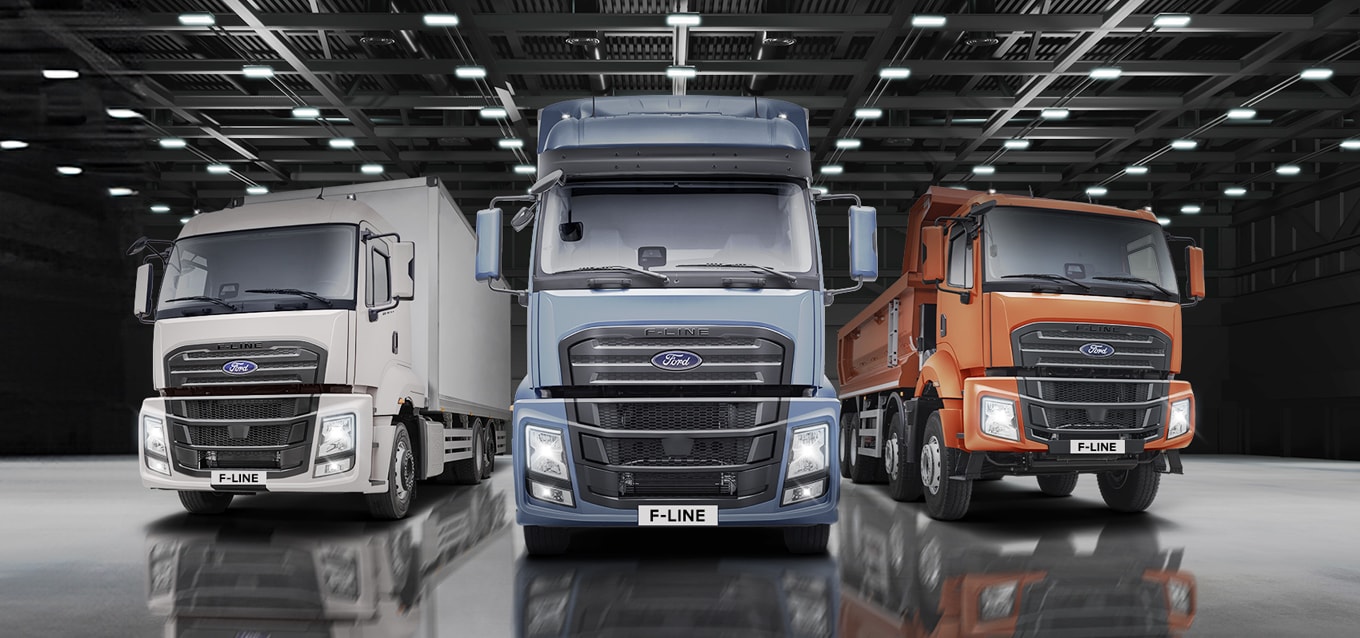
Ford Trucks F-LINE Series Review: Chasing the European Heavyweights
Fleet managers today lose sleep over two distinct headaches: razor-thin margins and a chronic shortage of drivers. Ford Trucks addresses these anxieties directly with the F-LINE series, a lineup that attempts to shed the brand's "budget alternative" reputation and go toe-to-toe with premium rivals like Volvo and Scania. Unveiled in Antalya and heavily promoted at the recent Solutrans exhibition, the F-LINE isn't just a facelift—it’s a hardware and software reset aimed at keeping Ford relevant in a market rapidly shifting toward autonomy and digitization.
Ford Trucks is clearly tired of being the underdog. The F-LINE series represents an aggressive push into international markets, targeting the "triad" that actually sells trucks: driver retention, active safety liabilities, and data-driven uptime.
Targeted Segmentation: Road, Construction, and Tractor
Ford has wisely avoided a muddy, all-purpose launch. The F-LINE is sharply divided into three functional categories, acknowledging that a truck hauling aggregate has entirely different chassis stress points than one hauling palletized goods across borders.
-
Road Trucks: Built for regional distribution and logistics.
-
Construction Trucks: Reinforced for the abuse of quarry work and off-road grades.
-
Tractor Trucks: Streamlined for long-haul aerodynamics and fuel economy.
Ford Trucks Leader Emrah Duman pitches this as "creating value," but the engineering reality is more practical. By avoiding a "one-size-fits-all" chassis strategy, Ford can tune suspension travel and torque maps specific to the job site versus the highway.
Powertrain Dynamics: Why 16 Gears Matter
This isn't just spec-sheet padding. For a 420 PS engine, which sits on the lower end of the power spectrum compared to the 500+ PS behemoths often seen in long-haul, those four extra gears are crucial. They allow the transmission to keep the engine tighter within its peak torque band. It offers finer granularity when climbing grades under load, preventing the engine from bogging down or revving unnecessarily high—both of which kill fuel economy. The drive modes allow the truck to behave like a mule when fully loaded on a hill, and a coaster when cruising empty on the flat, attempting to squeeze every kilometer out of a liter of diesel.
Advanced Safety Architecture
Safety features are no longer just about protecting life; they are about protecting the fleet's insurance premiums. The most significant leap for the F-LINE is the move from passive warnings (beeping at the driver) to active intervention (taking control of the truck).
Intelligent Response Systems
Ford is playing catch-up to the safety standards set by the likes of the Mercedes Actros, but the F-LINE closes the gap significantly.
-
Pedestrian Advanced Emergency Braking System: In the chaotic environment of urban delivery or active construction sites, human reaction times often fail. This system uses radar and camera fusion to identify pedestrians and slam the brakes if the driver doesn't.
-
Intelligent Adaptive Cruise Control with Stop & Go: This is essential for modern driver retention. In heavy traffic, the truck manages the tedious creep-and-stop cycle autonomously. While not fully autonomous driving, it significantly lowers the cognitive load on drivers, reducing fatigue-related errors.
Ford is betting that these active systems will make the F-LINE palpable to risk-averse logistics giants who previously might have overlooked the brand for lacking high-tier ADAS.
Connectivity: Beyond the Marketing Buzzwords
Every manufacturer today claims to have a "connected fleet," and Ford is no exception. The launch materials lean heavily on "connected vehicle technologies," but skepticism is warranted here. Telematics is industry standard; the question is whether Ford's implementation offers actionable data or just noise.
The F-LINE’s "ConnecTruck" system promises real-time visibility into vehicle health and location. Theoretically, this allows fleet managers to predict maintenance failures before a truck is stranded on the roadside—the ultimate killer of profitability. However, Ford is entering a crowded space where Scania and Daimler have years of data head-start. For the F-LINE to succeed here, the user interface and the predictive algorithms need to be better than the competition, not just present. The promise is "maximum on-road opportunities," but the proof will be in whether the software can genuinely reduce downtime events compared to established rivals.
The Driver Recruitment Angle
The design philosophy of the F-LINE has a clear ulterior motive: recruitment. With the industry facing a massive deficit of qualified drivers, the cab is a recruitment tool. A driver is more likely to sign with a fleet running modern, comfortable rigs than one running spartan equipment.
The interior and exterior redesign focuses on comfort and ergonomics, directly challenging the premium feel of Swedish trucks. The launch at Solutrans signaled confidence—Ford believes this truck is nice enough to lure drivers away from their preferred brands. It balances the rugged utility required for construction with the digital sophistication expected by a younger generation of truckers.
The F-LINE is a cohesive argument for efficiency and a solid alternative in a market dominated by legacy giants. It acknowledges that while the job—moving heavy loads—hasn't changed, the technology required to do it profitably has completely transformed.